Connect with us

News

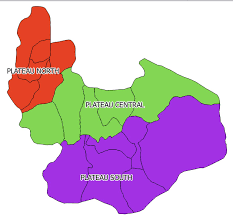
Plateau: Poverty fueling girls’ abscondment from homes

editor

Published

on

Pla

About a month ago, Mr. Patrick from Kabwir, Pankshin local government area of Plateau State raised an alarm that his 25-yrs old daughter, Ritmwa and her three years old daughter were missing. He contacted his relatives who began a search until the duo were found in Jos, the State capital with a woman identified as Mary who was planning to send them to Warri, Delta State.

Ritmwa is a barely literate adult but vulnerable, she said she was promised a job in Warri hence her abscondment from her home in Kabwir.

Last December, Abigail, a pregnant 19 years old from Jos was lured to Abuja by two women who promised to help her get a new life. Her new born baby was snatched from her by unknown persons while she was pushed into prostitution. Her father, Mr. Emmanuel now worries how the baby could be recovered.

In October, 2022, 17 years Na’ankiel from Mikang was taken in the night from her home in Garkawa to Port Harcourt in Rivers State with a promise of getting a job as a maid to a family, she returned with stories about being turned to a prostitute.

In the same year, a pregnant woman left Gidan Dabat in Qua’an Pan local government area to roam the streets in Jos in search of “someone who will buy” her baby because she learnt that “they sell babies in Jos.”

Recall that insecurity and poverty in the recent past had exposed Plateau State to the rising cases of human trafficking, spousal/child abandonment, sexual abuses, drug dependency, cultism and other emerging vices. The National Human Rights Commission, the State Ministry of Women Affairs and Social Development, Nigeria Association of Women Journalists, International Federation of Women Lawyers, among other groups repeatedly raised concerns about the development.

Although insecurity in the hinterlands has abated, poverty is now exposing young women/girls to abuses as they ignorantly get trafficked out in the guise of greener pasture. The trend is for those who got out to return and flaunt their “wealth and exposure” and lure others who show interest to join.

However, Ritmwa who was intercepted in His and her planned journey aborted is not a happy person as she said the quest for employment motivated her to embark on the journey.

She said, “I was going to Warri to look for job, friends testified there are openings there. Madam Mary is the grandmother to the people who called me to come to Warri and she was helping me to go there.

“I did not inform anyone where I was going because when I told my father about the plan, he didn’t buy the idea but because I am looking for employment so that I can send my child to school, I had to go with them. I need my own money, I have been helping my stepmother to sell food in the village, I don’t know anybody in Warri but I was willing to try because people told me there are jobs there.”

Ritmwa’s aunt who found her and her child at the Tudun Wada area of Jos north local government area said, “We have seen cases where what seemed as genuine jobs turned out to be a scam. These people prey on vulnerable people and take their children away. When the children return, some will come back very sick before you know, they will die. The children have very terrible tales to tell that is why we must do everything to prevent them from leaving home in this manner.”

Uba-Ochanya Fatoki, the Programme Manager/Legal Officer, Christian Women for Excellence and Empowerment in Nigerian Society, CWEENS whose organization works with vulnerable people cautioned parents against giving out their children.

She said, “Parents should be discouraged from sending off their children in search of greener pasture because this has proven to do more harm than good to the children in the long run. Experiences from working with young girls have shown that promises of a better future made by the care givers are never kept and these children are seen either roaming the streets or even being exposed to dangerous situations.

“There are varying risks that accompany sending children especially young girls to live in places outside their homes, where they would work as domestic servants. Some of the common risk children face include; long and tiring working hours, insufficient or inadequate food and accommodation, denial of access to education, healthcare and right to rest/leisure, humiliating treatment including physical and verbal violence and sexual abuse.

“These factors can have irreversible physical, psychological, and moral impact on the development health and wellbeing of a child. Also, many children who have been uprooted from their homes risk being forced into work or even being trafficked, especially if they are migrating alone or taking irregular routes without their families.”


Continue Reading
Click to comment

Leave a Reply

Your email address will not be published. Required fields are marked *

Business

Nigerian govt not operating “shadow budget” – Finance Minister

info

Published

on

By

Admin ajax 3 2.jpg

MTN ADVERT

The Federal Government has dismissed claims that it spent more than ₦8 trillion outside the approved budget, insisting that it does not operate a “shadow budget” and that all public expenditures are carried out within the framework of the Constitution and relevant laws.

In a statement issued on Sunday, the Minister of Finance and Coordinating Minister of the Economy, Taiwo Oyedele, described recent public commentary suggesting that about two per cent of Nigeria’s Gross Domestic Product (GDP) was spent outside legislative approval as inaccurate and misleading.

The minister said the claims, reportedly linked to references made by the International Monetary Fund (IMF) and its 2026 Article IV Consultation Report, created a false impression about the Federal Government’s financial management practices.

“For the avoidance of doubt, the Federal Government does not operate a ‘shadow budget’ or expend public funds outside the constitutional and statutory framework established for public finance,” Mr Oyedele stated.

He explained that under Sections 80 to 83 and 162 of the 1999 Constitution, as amended, public funds may be withdrawn and spent only in accordance with constitutional provisions and laws enacted by the National Assembly.

PT WHATSAPP CHANNEL

According to him, federal expenditures are undertaken through duly enacted Appropriation Acts, Supplementary Appropriation Acts and other statutory authorisations approved by lawmakers.

The minister also noted that multi-year capital projects, which often extend beyond a single fiscal year, are implemented under existing legal provisions, including approved capital rollovers where necessary.

He argued that such arrangements are standard features of public financial management and should not be interpreted as spending outside the budget.

Mr Oyedele challenged those making the allegations to provide evidence of specific projects allegedly executed without appropriation or legal authorisation.

“Such allegations should have identified the specific projects purportedly executed without appropriation or legal authority and present credible evidence in support of the claim,” he said.

The minister further explained that Nigeria’s fiscal framework includes several statutory transfers, first-line charges and intervention mechanisms established by Acts of the National Assembly.

These include statutory allocations to development commissions and agencies created by law, cost-of-collection provisions for revenue-generating agencies, capital expenditures approved through separate budgets, special interventions addressing national priorities, as well as debt service obligations and other statutory transfers.

He stressed that these expenditures are lawful, publicly disclosed and subject to oversight, audit and accountability mechanisms.

According to Mr Oyedele, differences between how such expenditures are reported in fiscal documents and how they appear in annual appropriation laws often arise from international reporting standards and should not be misconstrued as evidence of unlawful spending.

The minister also rejected suggestions that the reported amount represented an increase in Nigeria’s fiscal deficit.

He explained that fiscal deficits are determined by the relationship between total government revenues and expenditures, adding that the source of financing for approved projects does not automatically increase the deficit.

Mr Oyedele said the IMF’s observations were largely focused on improving the comprehensiveness, timing and presentation of fiscal reporting rather than questioning the legality of government spending.

He recalled that President Bola Tinubu had, during the presentation of the 2026 Appropriation Bill to the National Assembly in December 2025, advocated harmonising multiple and overlapping budgets into a single, cohesive framework.

The minister reaffirmed the Federal Government’s commitment to transparency, accountability and prudent fiscal management, noting that ongoing reforms have strengthened budget credibility, revenue administration, treasury management and the digitalisation of government financial processes.

READ ALSO: Oyedele confirms Nigeria has drawn first $1.5 billion under $5 billion Abu Dhabi financing deal

He added that these reforms have received recognition from the IMF, other multilateral institutions, international credit rating agencies, investors and major global media organisations.

While welcoming public scrutiny of government finances, Mr Oyedele urged commentators to ensure that debates are based on facts and a proper understanding of Nigeria’s constitutional and fiscal framework.

“The Federal Government will continue to uphold the rule of law, maintain transparency in the management of public resources, and work with the National Assembly, oversight institutions, development partners and the Nigerian people further to strengthen fiscal governance in line with international best practices,” he said.


Continue Reading

News

Amazon will stop accepting new customers for Mechanical Turk

info

Published

on

By

GettyImages 2280727243.jpg

These may be the last days of Amazon’s Mechanical Turk.

An announcement on the Mechanical Turk website says that on July 30, 2026, the crowdsourcing service will close to new customers. Amazon Web Services says the decision was made after “careful consideration,” adding, “Existing customers can continue to use the service as normal. AWS continues to invest in security and availability improvements for Mechanical Turk, but we do not plan to introduce new features.”

In other words, Amazon isn’t completely pulling the plug, but the service is very much on life support.

First launched in 2005, Mechanical Turk was a marketplace where people were paid tiny amounts to perform simple tasks that resisted full automation — things like completing CAPTCHA challenges or identifying the basic sentiment in a sentence.

In its heyday, the service was at the center of debates around the ethics of crowdsourced labor, and it even played a small role in the early stages of the Facebook-Cambridge Analytica scandal. 

Beginning in 2018, Amazon also began billing it as a way for companies to annotate data to train neural networks as part of its SageMaker AI service.

Less overtly, Mechanical Turk has also been described as the hidden enabler for companies taking a fake-it-till-you-make-it approach to AI, where products marketed as Ai are actually being performed by the Mechanical Turk workforce — all the more fitting since the original Mechanical Turk was itself a hoax, with a hidden human chess player pretending to be a chess-playing machine

Over time, the relationship between Mechanical Turk and AI models grew even more complicated. In a snake-eating-its-own-tail irony, a 2023 analysis found that between 33% and 46% of workers on the platform were using large language models to complete their tasks, raising questions about the reliability of data annotated on the platform and also about whether humans needed to be in the loop at all.

This week, after Amazon’s decision became public, one Reddit user suggested the platform died “years ago,” with workers and researchers abandoning it due to bots and fraud. The user predicted, “Someone at Amazon is going to decide keeping the Mturk servers running is a waste of time and resources and pull the plug entirely.”

When you purchase through links in our articles, we may earn a small commission. This doesn’t affect our editorial independence.

Continue Reading

Trending