Connect with us

Education

IGSR Donates Literature Books and Stationaries to 20 Schools in Plateau Central Senatorial Zone to Support Peace Club Activities

info

Published

on

IGSR Donates Literature Books and Stationaries to 20 Schools in Plateau Central Senatorial Zone to Support Peace Club Activities

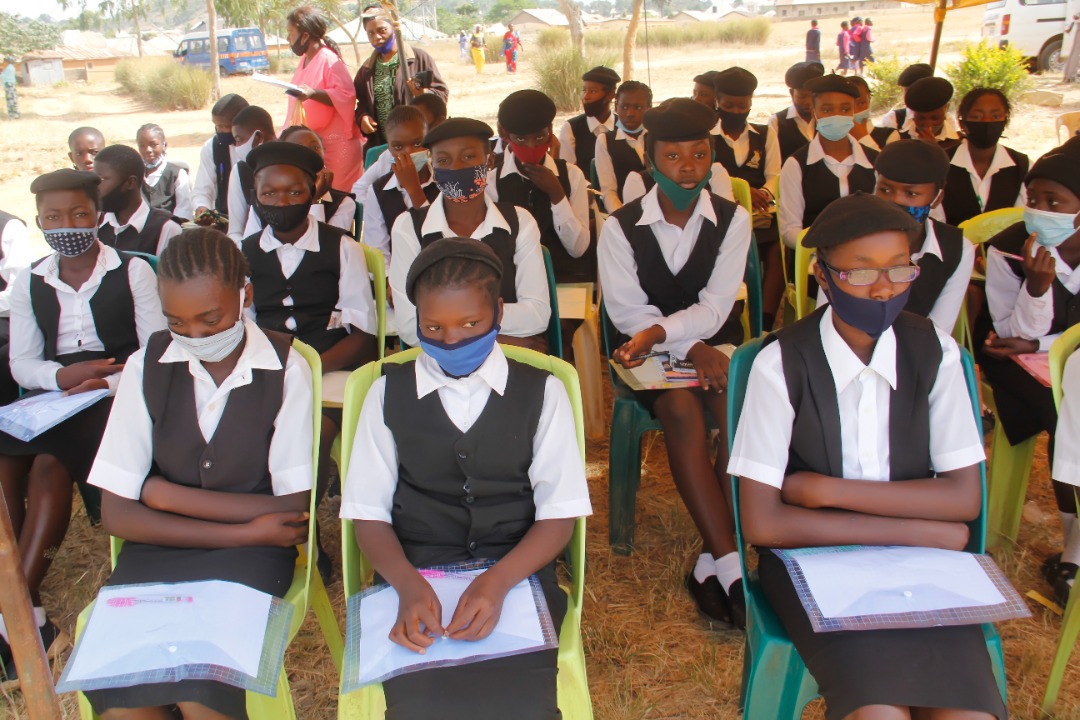
The Institute of Governance and Social Research in collaboration with Global Community Engagement and Resilience Fund (GCERF) organised a Four-day programme for peace clubs under the safe school initiative on the theme “Using Art to Create Awareness on The Dangers of Violent Extremism and Promoting Tolerance”. The Safe school initiative is one of the activities under the project titled “The Youth and Peaceful Co-existence in Community: The Plateau Case” Round II sponsored by the Global Community Engagement and Resilience Fund (GCERF). The aim of the initiative is to strengthen the capacity of teachers and students to prevent violent extremism and radicalization in schools. Under the safe school initiative, Peace clubs have been established in 20 secondary schools in the 5 LGAs of the Central Senatorial Zone i.e Kanam, Kanke, Pankshin, Mangu and Bokkos LGAs (4 schools per LGA). In March 2021, IGSR organized an activity to support the peace clubs carry out PVE activities and donated educational materials to support the schools.

As a follow-up to that activity, the Institute organized an activity to support the peace clubs to organize PVE activities and also donated literature materials to the various schools. The activity took place from the 27th-30th of September 2021 (a day for Kanke and Kanam LGAs and a day each for Pankshin, Mangu and Bokkos LGAs) for 20 secondary schools in the Central Senatorial Zone. The objective of the program was to provide support for peace club activities towards the prevention of violent extremism and radicalization, create awareness on the drivers and effects of violent extremism, promote tolerance among students of different ethnic and religious groups using peace clubs and create a platform for students to share knowledge on peace building. The programme had in attendance representatives from the Plateau State Ministry of Education, representatives of the Local Government Councils, Parent Teachers Association Chairpersons, Traditional Rulers, Community Leaders, Teachers and Students from the 20 secondary schools under the Safe School initiative in the 5LGAs.

During the activity in the 5 LGAs, there were welcome remarks from IGSR’s staff giving a brief overview of the initiative as well as the importance of the program, which is to support schools in the prevention of Violent Extremism. There were also art presentations (drama, dance and poetry) from the Peace Club students on the following thematic areas:

Dangers and Effects of Violent Extremism.

The Role of Young People in Preventing Violent Extremism.

Tolerance as a Key to Peaceful Coexistence.

The activity was highly educative and entertaining as the students made presentations in drama/dance, the activities afforded all participants the opportunity to learnt from themselves as the presentations portrayed lessons on beauty in diversity and that differences should not bring division or violent conflict, but individuals should learn from the various religious and ethnic groups represented in their communities to foster unity, growth and progress.

As part of IGSR’s support to the schools, the Institute and its partners, GCERF, donated literature books and stationaries (exercise books, pens, flip charts, markers and so on) to the 20 participating schools. IGSR’s Senior Program Officer, Mr. Samuel Emelis said the literature materials were donated to strengthen their libraries, build a reading culture in the students and to facilitate the organisation of future Peace Club activities in the schools. He urged the schools to make judicious use of the items donated.

At the end of the activity, the schools and invited guests appreciated IGSR and its donors GCERF for their continuous efforts in building community resilience to violent extremism as well as ensuring the educational development of the students.

Below is the list of participating IGSR Peace Clubs Schools in Plateau State Central Senatorial Zone.

Government Secondary School, Mushere (Bokkos LGA)

Akiluwa Secondary School (Bokkos LGA)

Government Secondary School Ngoksar ( Bokkos LGA)

Andy Comprehensive College, Marish (Bokkos LGA)

Boys Secondary School Gindiri (Mangu LGA)

Government Science School Mangun (Mangu LGA)

Islamic Secondary School Gindiri, (Mangu LGA)

Girls High School Gindiri (Mangu LGA)

Good Shepherd College (Pankshin LGA)

Government Secondary School Wokkos, (Pankshin LGA)

Government Secondary School Jing (Pankshin LGA)

Langkuk Memorial Comprehensive Secondary School (Pankshin LGA)

Kabwir Comprehensive Secondary School, Lepchalim (Kanke LGA)

Government Secondary School ForkhirAmper (Kanke LGA)

Government Secondary School Ampang East (Kanke LGA)

Ganaka Girls Memorial College Kwal (Kanke LGA)

Government Girls Secondary School, Dengi (Kanam LGA)

Government Model Secondary School, Dengi (Kanam LGA)

Government Secondary School Jarmai, (Kanam LGA)

Government Secondary School, Kunkyam, (Kanam LGA)

Continue Reading
Click to comment

Leave a Reply

Your email address will not be published. Required fields are marked *

Education

Tinubu Urges Inclusive Policies, Active Child Participation at 2026 Children’s Day Celebration

info

Published

on

By

Bola Tinubu 1.jpg

Bola Ahmed Tinubu has called on governments at all levels, families and communities to move beyond symbolic gestures and build a society where children are genuinely listened to and actively involved in decisions affecting their lives.

The President made the call during the 2026 National Children’s Day celebration held at Eagle Square in Abuja.

Represented by the Minister of Women Affairs and Social Development, Imaan Sulaiman-Ibrahim, Tinubu told pupils and students from primary and secondary schools that their voices, ideas and well-being are central to Nigeria’s future.

According to the President, the assurance that “your opinion matters, your ideas matter, your well-being matters” should not be treated as mere rhetoric but as a guiding principle for democratic renewal and national development.

The event, themed “Future Now: Promoting Inclusion for Every Nigerian Child,” focused on the need to ensure that no child is excluded from opportunities because of social status, physical condition or geographical location.

Tinubu stressed that every Nigerian child, whether from rural or urban communities, deserves equal access to quality education, healthcare, nutrition, protection, digital opportunities and a sense of belonging.

The President highlighted several programmes under the Renewed Hope Agenda aimed at improving child welfare and development, including the Renewed Hope Social Impact Intervention–774, Nutrition 774, ANRiN 2.0 and the Nigerian Education Loan Fund (NELFUND).

He also pointed to investments in Science, Technology, Engineering and Mathematics (STEM) education as well as the Ministry of Education’s NEDI platform as part of efforts to equip children with digital and technological skills for the future.

On child protection, Tinubu noted that although the Child Rights Act has been domesticated across the country, the federal government is currently reviewing both the Act and the National Child Policy to strengthen their effectiveness.

He added that through the 2025 Costed Action Plan, the government is providing financial backing to tackle violence against children, child marriage and female genital mutilation.

The President further encouraged state governments to strengthen the Nigerian Children’s Parliament, describing it as an important platform for nurturing leadership, civic responsibility and democratic participation among children.

Tinubu also advised children to avoid violence, cultism, substance abuse, cybercrime and bullying, warning that such vices destroy destinies and undermine national development.

He urged them to embrace discipline, honesty, patriotism and responsible use of technology.

In her welcome address, the Minister of State for the Federal Capital Territory, Mariya Mahmoud, represented by the Acting Mandate Secretary of the Women Affairs Secretariat, Hajiya Mukhtar, said the FCT Administration, with support from UNICEF, is strengthening community-based child protection systems, training social workers and improving oversight of orphanages and care homes.

One of the highlights of the event was an address delivered by Jessica Nufi, a student of Government Secondary School, Garki, Abuja, who spoke on behalf of children across the country.

Jessica appealed to the government to make quality education free and accessible, strengthen protection against insecurity and violence, and address early marriage, cultism, drug abuse and environmental hazards.

She lamented that poverty, insecurity and harmful social practices continue to deny many Nigerian children, especially girls, access to education and a safe future.

The student also called for improved healthcare services for children with special needs and safer school and community environments.

She urged leaders to build a Nigeria free from drugs, cultism and environmental dangers — a country the younger generation could proudly inherit.

Ending her speech with a pledge on behalf of Nigerian children, Jessica promised that children would continue to obey their parents and teachers, study hard, reject harmful behaviours and grow into responsible leaders if adults fulfilled their responsibilities toward them.

Her remarks received applause from children, parents and dignitaries at the event.

Continue Reading

Education

FG Partners with Coursera to Fund 36,000 Youth Tech Licences

lamaqgodoz

Published

on

20260523

The Federal Government of Nigeria has launched a massive digital empowerment drive by securing and fully funding 36,000 learning licences across Coursera and Pluralsight.

Unveiled as part of the newly established Digital Training Academy (DTA), this landmark initiative aims to eliminate financial barriers and equip young Nigerians with globally competitive tech skills.

The Minister of Education, Dr. Tunji Alausa, formalised and signed the strategic partnership on the sidelines of the Education World Forum (EWF) in London. Operating under President Bola Ahmed Tinubu’s Renewed Hope Agenda, the DTA is being hailed as one of the largest government-funded investments in digital education in Nigeria’s history.

20260523

Addressing the High-Demand Tech Gap

The first year of the programme targets core fields shaping the future global workforce. Beneficiaries will undergo rigorous training to earn certifications highly valued by local and international employers in; Artificial Intelligence (AI), Cybersecurity, Data Science, Cloud Computing, and Software Engineering.

“Digital competency is no longer optional. It is foundational,” Dr. Alausa stated via an official release. He added that the administration is focused on building a generation of young Nigerians capable of leading and thriving within a rapidly evolving digital economy.


The Hybrid Implementation Strategy

Recognising that access to online tools is only half the battle, the Federal Ministry of Education has structured a hybrid model to ensure high completion rates:

1. Geographical Inclusion: The National Open University of Nigeria (NOUN) will leverage its vast nationwide network of study centres to ensure equitable slot distribution across all geopolitical zones.

2. On-the-Ground Mentorship: Yaba College of Technology (YABATECH) will provide technical facilitators, industry-focused expertise, and accountability structures to guide learners through their courses.


Why This Matters: The Economic Stakes

Nigeria’s youth demographic is expanding rapidly, yet a substantial digital skills gap persists. Economic analysts estimate that the lack of formal digital education among local graduates costs the national economy billions of dollars in lost potential productivity annually.

By partnering directly with elite, multinational platforms like Coursera and Pluralsight, the government is bypassing traditional infrastructure constraints. This model gives Nigerian youth direct access to the exact same training resources utilized by top tech professionals across the US, Europe, and Asia.

Continue Reading

Trending