News
How AfCFTA; women’s involvement improves Morocco’s economy, boosts food security


The Kingdom of Morocco like other African countries has agriculture contributing to its gross domestic product. Also, the country has over time developed healthy trade relations with countries within and outside the continent.
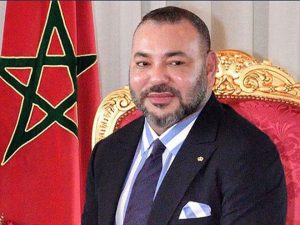
His Majesty King Mohammed VI of Morocco
Being the 43rd country to ratify the African Union introduced African Continental Free Trade Area, AfCFTA in 2022, the Kingdom is exploiting the initiative to improve its economy as it also encourages women especially those in rural areas to engage in profitable farming to improve household income and ensure food security.
Speaking on how the AfCFTA initiative boosts his country’s economy; the country’s nutrition index; the place of Moroccan women in ensuring food security and other issues, the Ambassador of the Kingdom of Morocco in Nigeria, H.E M. Moha ou Ali Tagma explained “the proactive policy of His Majesty King Mohammed VI,” has been helpful.
According to him, “Morocco has always been a great agricultural country, and today, it is one of the most important exporters of food products to Europe. Agriculture represents almost 18% of the gross domestic product. The nutritional situation in Morocco has improved significantly over the last few years, in particular the important decrease in food insecurity. In 2022, Morocco ranked 47th out of 126 countries in the world hunger index.
“By WHO recommendations, the Ministry of Health developed and implemented a National Nutrition Strategy (2011-2019) for the entire life cycle to contribute to the improvement of the health status of the population by acting on one of its major determinants which is nutrition.
“A comprehensive and integrated National Nutrition Program, which is part of the implementation of this Strategy, and which is perfectly in line with international commitments, in particular the Declaration of the 2nd Nutrition Conference of 2014, the Sustainable Development Goals, and the Decade of Action for Nutrition 2025, has been put in place with objectives for the year 2030… The implementation of this programme has also benefited from the support of several partners, including some ministerial departments, international organizations, industrialists, universities, and NGOs.”
Efforts to address threats to food security
The Ambassador pointed out the measures put in place to address food insecurity as he said, “Threats to food security, include the COVID-19 pandemic, the current conflict in Ukraine and climate change, economic recession, inflation, disruption of supply chains, declining water resources, rising production costs and food prices, and declining household purchasing power.
“Thanks to the proactive policy of His Majesty King Mohammed VI, Morocco has been able to put in place an integrated approach, which aims to guarantee food availability by increasing market supply, including through the use of duty-free imports, to promote sustainable agricultural and rural development, to focus on the protection of natural resources and to adapt to climate change.
“The Kingdom has launched, in line with the 2030 Agenda of the African Union, a new agricultural strategy, Generation Green 2020-2030, which aims, among other objectives, to increase agricultural production through the modernization of agricultural techniques and adaptation to climate change.”
Using AfCFTA to boost small businesses, ensure food security
AfCFTA aims to strengthen intra-Africa trade relations, ensure food security and meet the food demand of citizens. The Secretary-General of AfCFTA, H.E. Wamkele Mene at different fora stressed that the AfCFTA is not just a trade agreement but a development strategy.
He projected that “When we successfully implement the agreement, we will lift about 100 million Africans out of poverty and we would boost intra-Africa Trade by $35- 40 billion annually; increase value chain development in all sectors; enhance the competitiveness of industry economies of scale; reduce the trade deficit by 50.6%; increase level of investment in various sectors, create decent jobs and improve SME development and create employment.”
However, the Ambassador disclosed, “Morocco’s integration into the AfCFTA would be positive in terms of increasing Moroccan exports to Africa as well as imports from Africa. While trade liberalization under the AfCFTA could have a positive impact on Morocco, it would only directly affect the agribusiness and livestock sectors, helping to further strengthen our country’s food security – the other sector being industrial manufacturers.
“The AfCFTA would benefit the actors in these sectors by contributing to a significant increase in GDP, real household income, total Moroccan exports in volume, and an increase in the remuneration of unskilled and skilled labour. Morocco has been a pioneer in highlighting the importance of greater South-South cooperation on a continental scale.
“Morocco has carried out large-scale actions on the continent, both in terms of investments in key sectors of the African economy (banking, telecommunications, construction, and public works, fertilizer production, etc.) and in terms of implementing socio-economic development projects or sharing its successful experience in several structuring areas.
“Morocco has also gradually consolidated its position in the continent, through the strengthening and diversification of trade and the conclusion of a multitude of cooperation agreements in various fields like education, health, training, infrastructure, agriculture, etc.
“According to a study conducted by the Moroccan Department of Finance, Morocco could strengthen trade by adapting the Moroccan offer to the demand and specificities of African economies, the pursuit of more joint ventures and alliances between companies, and more efforts in developing road infrastructure between countries to facilitate intra-African trade and make it competitive, and improve the quality of distribution networks.”
Benefits of AfCFTA:
He further noted that the AfCFTA will integrate Africa into world trade and value production by attracting investment, as has happened in countries that have opted for trade liberalization hence, Morocco has been advocating for the effective operationalization of the AfCFTA as a crucial step towards the achievement of regional integration of the continent.
His words, “For Morocco, the operationalization of the AfCFTA is a crucial step towards the achievement of regional integration of the continent, while relying on the relevant strategies and projects of the AU to accelerate this process.
“The operationalization of the AfCFTA would open up a market of 1.2 billion consumers and increase intra-African trade by removing tariff and non-tariff barriers across Africa. This will help create more opportunities and jobs for African citizens, develop regional value chains, and strengthen infrastructure and the basis for intra-African trade.
“The AfCFTA is an impetus for the establishment of the African domestic market towards the creation of the African Economic Community envisaged by the Abuja Treaty.”
How Morocco/Africa can achieve food security goals by 2063:
The Ambassador reiterated, “The key word in development is regional integration. Europe has understood this since the 1950s. Asia, North America, and South America have been engaged for a very long time in very advanced regional integration processes. This is the path that Africa must follow. The liberalization of foreign trade wherever it has been undertaken has brought prosperity and well-being to the populations.”
Obstacles/solutions to food security:
Amb. Tagma stated, “Climate change is by far the main obstacle to the development of agriculture and the main threat to the food security of African populations. In terms of food security strategy, agricultural and rural development, and sustainable development, Morocco undertook in December 2014, under the Marrakech Declaration on South-South Cooperation, efforts to exchange experiences, pool expertise, and transfer skills, in a logic of mutually beneficial partnership between African countries.
“The Triple-A initiative ‘Adaptation of African Agriculture to climate change’ initiated by the Kingdom on the sidelines of COP22 aims to contribute to food security on the African continent through the promotion of practices aimed at better adaptation to climate change, capacity building of stakeholders and the channelling of financial flows to the benefit of hard-hit audiences.
“The Triple S initiative ‘Sustainability, Stability and Security in Africa’, jointly initiated by Morocco and Senegal, aims to help thousands of villages in Africa to create green jobs and promote investment opportunities by migrants themselves; adopt drought early warning systems; strengthen land tenure; identify hotspots of land degradation, population movements, and migration; follow new pastoral routes to prevent the emergence of tensions over natural resources; and integrate natural resource management into national security strategies and migration policy.”
“Morocco also contributes to guaranteeing food security in the World and particularly in Africa through the contribution of OCP, the world’s leading exporter of phosphates and fertilizers. OCP has undertaken vast investments in Nigeria and other African countries to produce fertilizers adapted to the soil of each country at affordable prices for farmers. OCP is also contributing to the modernization of agriculture in several African countries by helping them establish soil maps.”
The Role of Moroccan Women in Food Security:
He confirmed that Morocco encourages the contribution of women to the strengthening of food security through “the many cooperatives created and run by women,” and stated that, “Morocco currently has more than 2,300 100% women’s cooperatives (14% of all cooperatives), 33% of which are in agriculture. These cooperatives allow women to gain economic autonomy and thus become active players in economic and social life, particularly in rural areas, and to meet the needs of their families. These cooperatives have been encouraged by initiatives such as “Halieutis” in the fishing sector and the Green Morocco Plan in the agricultural sector.”
This article was developed with support from the African Union through the African Union Agenda 2063 Pitch Zone Awards, a partnership with the African Women in Media.

News
Troops killed eight terrorists, rescued 30 kidnap victims nationwide in two days: Army

Troops of the Nigerian Army have killed eight terrorists, rescued 30 kidnap victims and recovered several weapons in operations across the country.
The military operational update made available on Wednesday, said the operations were conducted between August 31 and September 1 across theatres.
The report said the troops of 151 Task Force Battalion, Sector 1, Operation HADIN KAI, neutralised a terrorist after fighting through an ambush involving a concealed improvised explosive device in Borno.
It added that troops recovered an AK-47 rifle, 14 rounds of 7.62mm special ammunition and an IED initiator during the encounter at Miyanti-Banki Junction, Bama Local Government Area (LGA).
According to the report, the engagement, however, resulted in the death of one soldier, while another sustained injuries and a military gun truck was damaged.
“In Yobe, troops of 120 Task Force Battalion, in conjunction with the Civilian Joint Task Force, neutralised another terrorist at Lamusuri, Gujba Local Government Area.
“The troops recovered an AK-47 rifle, two magazines, 90 rounds of 7.62mm special ammunition and a body pouch after the encounter.
“The military also recorded aerial success in Abadam Local Government Area of Borno, where an air strike neutralised three terrorists and destroyed structures used as hideouts,” he said.
The report also revealed that troops of the 211 Demonstration Battalion, Operation MESA, neutralised two terrorists and rescued nine kidnapped victims from Makodi Gwamnare Forest in Ningi LGA of Bauchi State.
It added that troops recovered eight mobile phones and N1.48 million from the terrorists, while the rescued victims were reunited with their families.
In Kogi, the military said the troops of 21 Battalion, working with the police, State Security Service and local hunters, rescued 21 victims abandoned by fleeing kidnappers.
It said the victims, comprising eight males and 13 females, were rescued from Egume-Ochaja Forest in Dekina LGA.
According to the report, one male victim who sustained a gunshot wound during the operation was stabilised at a military medical facility.
“In Katsina, troops of 17 Brigade and an Office of the National Security Adviser tactical team neutralised two terrorists and destroyed two motorcycles during a fighting patrol in Kogo Village, Matazu LGA. In Zamfara, troops responding to intelligence on cattle rustling were ambushed at Bude Village, Bungudu Local Government Area, but fought through and forced the terrorists to abandon the rustled cattle.
“In Plateau, troops arrested four suspected criminals and recovered a locally fabricated firearm, three motorcycles, a cutlass and a knife at Exland Village, Barkin Ladi Local Government Area. In Delta, troops intercepted a trailer conveying illegally mined ilmenite and arrested two suspects along the Bomadi-Oro Junction road.
“In Rivers, troops engaged armed oil thieves involved in pipeline vandalism at the Oboburu community, forcing the suspects to flee, while one suspect sustained gunshot wounds. Troops also discovered an illegal refining site in Okarki Forest, Ahoada West Local Government Area, recovering equipment and about 40 litres of stolen crude oil,” he said.
The report said the latest operations underscored the military’s continued reliance on intelligence, joint operations and sustained offensive action to disrupt terrorists, kidnappers, criminal networks and economic saboteurs across the country.
(NAN)

-

 Events2 days ago
Nigeria’s Christian Leaders to Unite in Abuja for First Lausanne Congress in Over 10 Years (Register Now)
-
News4 days ago
Sony Music, Warner sue Anthropic, alleging a “brazen campaign” of intellectual property theft
-
Business4 days ago
OpenAI to end Cursor deal with SpaceX over contract, safety concerns
-
Business14 hours ago
PLACCIMA Nominates Bolcit Barshep-Amakiri as Vice President, Commerce