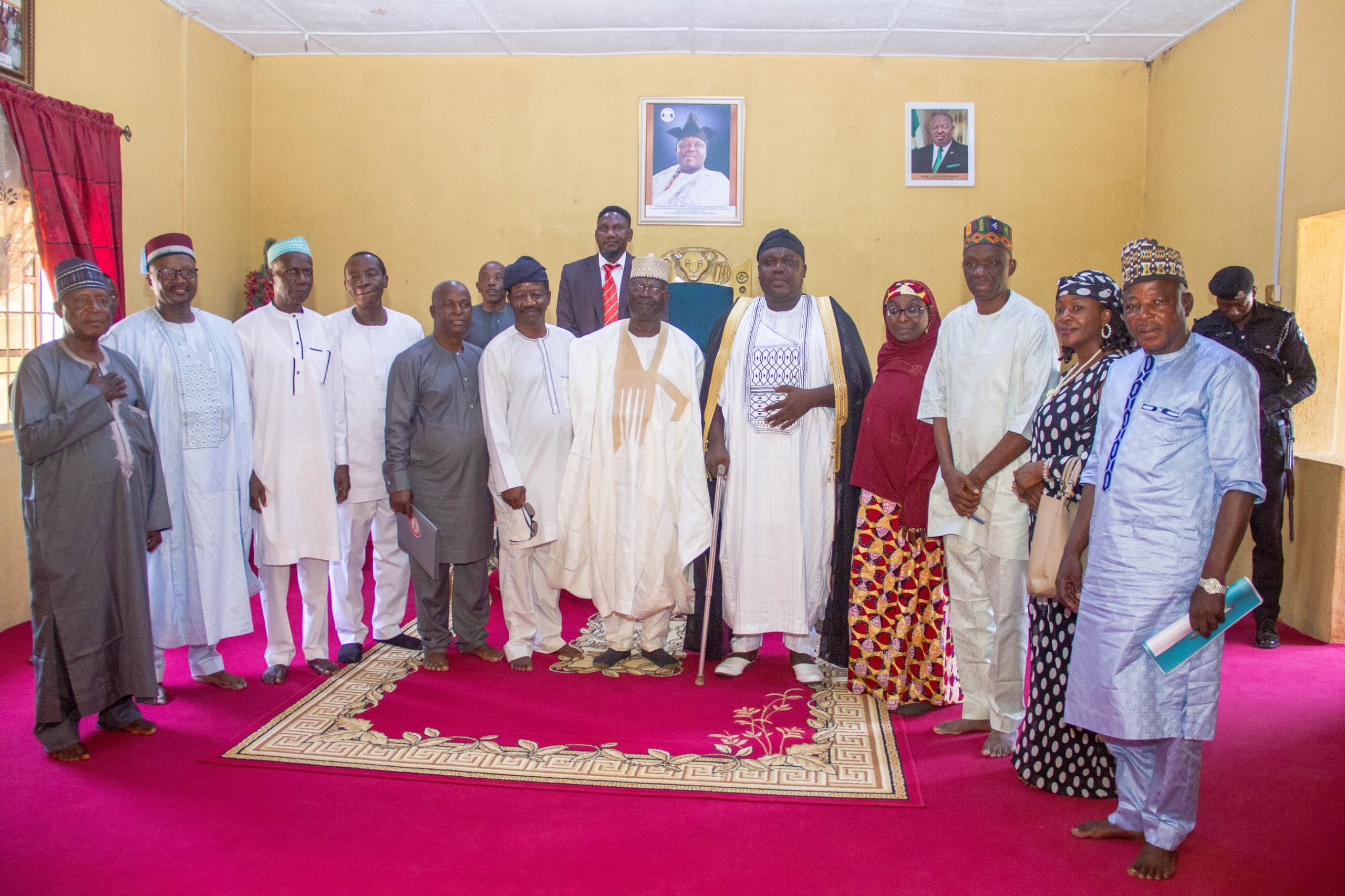
In an effort to address pressing concerns regarding land administration, the newly established High-Powered Committee, appointed by Governor Caleb Mutfwang and chaired by Barrister Isaac Dimka, embarked on a significant courtesy visit to The Ujah Anaguta , Johnson Jauro Magaji at his palace.
Under the leadership of Chairman Isaac Dimka, the delegation expressed their commitment to conducting a thorough assessment and delivering a comprehensive report aimed at facilitating effective implementation. During the visit, Dimka assured the Uja of the committee’s dedication to producing a report that addresses pertinent issues and guides necessary actions.
Furthermore, Chairman Dimka took the opportunity to inform His Royal Majesty, the Uja of Anaguta, and numerous district heads about the extended deadline for memorandum submissions due to public holidays This extension to April 30th aims to ensure timely and inclusive input from all relevant stakeholders in the process.
The visit highlighted the importance of collaboration between governmental bodies and traditional institutions in addressing critical matters such as land administration. As the committee continues its work, stakeholders eagerly anticipate the outcomes and subsequent actions aimed at improving land management and administration in Plateau State.
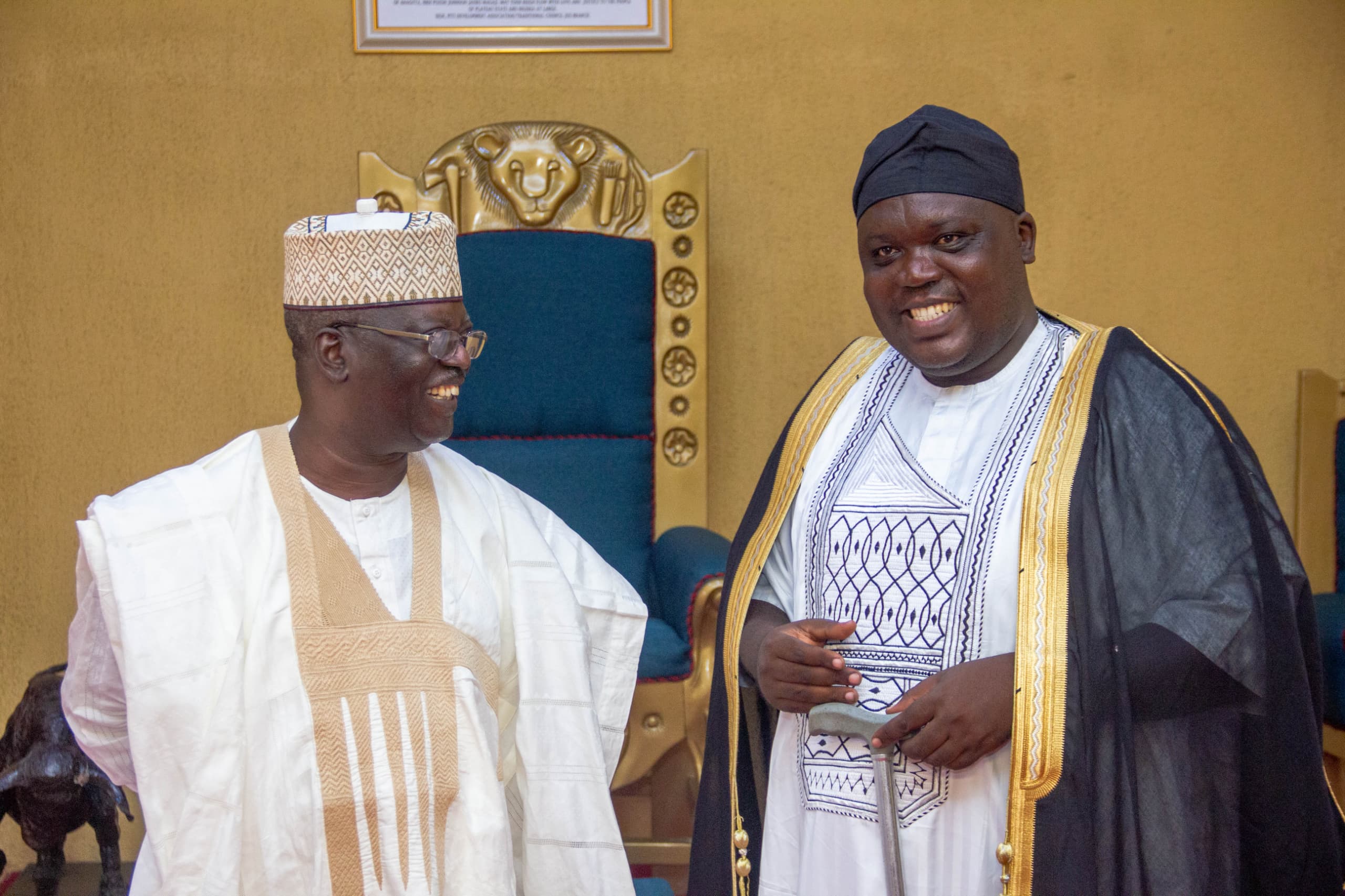
The Ujah Anaguta of Jos North, Johnson Jauro Magaji and the chairman lands administration committee Barrister Issac Dimka
The High-Powered Committee on Land Administration in Plateau State, recently inaugurated by His Excellency, Governor Caleb Mutfwang and chaired by Barrister Isaac Dimka, hereby extends the deadline for written submissions of memoranda regarding the committee’s terms of reference. The new deadline for submission is April 30th, 2024.
The committee now convenes at S.D Lar Lodge, Old Government House.
The committee’s terms of reference include:
1. Investigating the circumstances surrounding the acquisition and allocation of land within the Jos-Bukuru Greater Master Plan.
2. Addressing issues of illegal development in Government Estates, lands, and setbacks.
3. Ascertaining the authenticity of land/property acquired based on overriding public interest and identifying beneficiaries of such allocations.
4. Investigating demarcation, allocation, and sales of land within Government Reserve Areas across the State.
5. Addressing issues of encroachment on lands owned by the Government or other public institutions.
6. Examining annexation of mining sites/quarters across the state.
7. Investigating issues of land revocation, double allocation, and land grabbing.
8. Identifying individual groups or persons’ complaints in these transactions.
9. Addressing issues of compensation made on land acquired across the state and establishing outstanding amounts, if any.
10. Soliciting any other recommendations that may help the Government in managing land-related issues.
All written memoranda should be addressed to the Chairman and submitted to the Committee on Land Administration at S.D Lar Lodge, Old Government House. Ten spirally bound copies of such memoranda are required, and soft copies should also be forwarded to the committee’s email address at plsglandcom@gmail.com.
For additional information, please call the following numbers: 08111114441, 0803308825, or visit the committee’s website at www.plsglandadmin.com
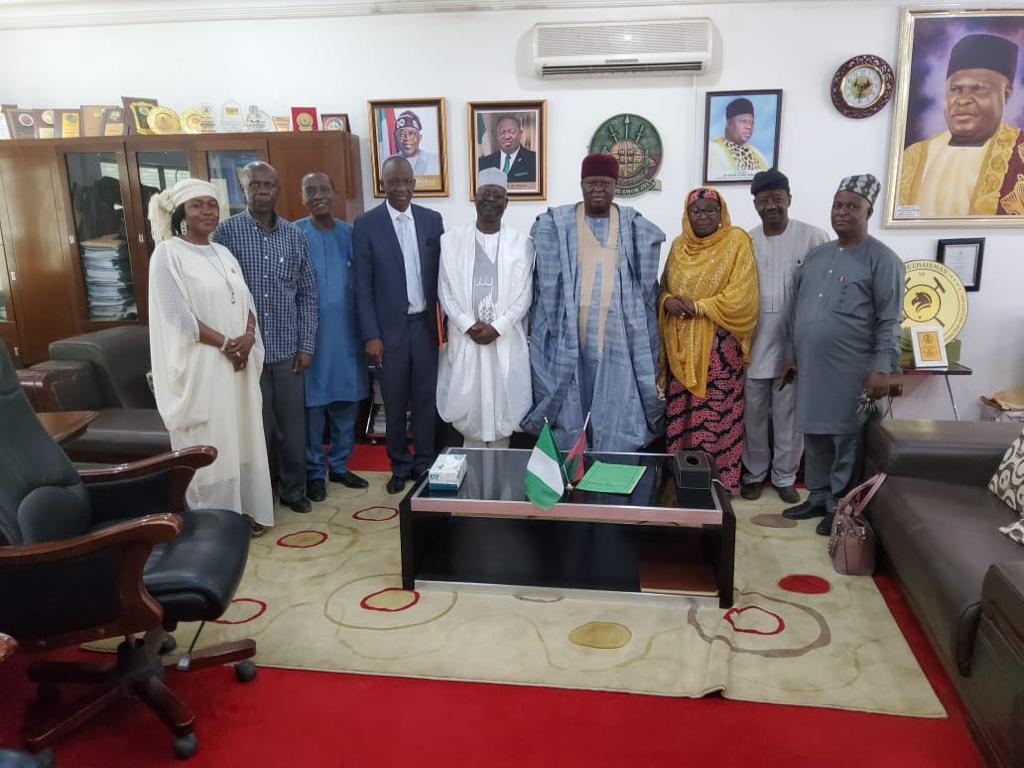
The committee on lands administration with the Gbong Gwom Jos, Da Jacob Gyang Buba
The story of African development is undergoing a profound, historic shift. For decades, the narrative was dominated by foreign capital, with investments flowing inward from distant global capitals, development projects managed by external actors, and the resulting profits regularly finding their way back across oceans. While Africa has always been rich in resources and opportunities, its financial destiny was largely shaped by outsiders. Today, that old story is being rewritten. Across the continent, African-owned institutions are stepping forward, expanding beyond their national borders, mobilising local capital, and proving that Africa possesses both the expertise and the financial strength to fund its own progress.
In the vanguard of this transformation is United Capital Plc, whose expansion into Ethiopia and Rwanda marks a defining moment in the evolution of regional investment banking.
The Nigerian financial services giant recently achieved a historic milestone by becoming the first foreign investment bank to secure an operating license in Ethiopia, one of Africa’s fastest-growing economies. Around the same time, the company obtained regulatory approval to operate in Rwanda, significantly strengthening its footprint in East and Central Africa. These milestones represent much more than standard corporate expansion; they symbolise the growing confidence of African financial institutions in the continent’s long-term future and highlight the increasing integration of Africa’s capital markets, proving that cross-border collaboration is a commercial reality.
The entry into Ethiopia is particularly momentous. With a population exceeding 120 million people and an ambitious economic reform agenda, Ethiopia has historically maintained a tightly controlled, closed financial sector. The government’s recent decision to gradually liberalise the financial industry has attracted global attention, and United Capital’s successful entry positions the company as a foundational architect in Ethiopia’s evolving capital market ecosystem. For Ethiopia, granting United Capital the country’s very first foreign investment banking licence signals deep trust, reflecting confidence in the institution and validating the broader vision of economic openness championed by Prime Minister Abiy Ahmed to modernise the economy and encourage private-sector participation.
Rwanda presents a similarly compelling success story. Widely regarded as one of Africa’s most business-friendly destinations, Rwanda has steadily transformed its capital, Kigali, into a premier regional financial hub. With this new regulatory approval, United Capital is authorised to provide a full suite of services, including investment banking, portfolio management, trust services, and capital market advisory services, thereby strengthening Rwanda’s position as a strategic gateway for investments flowing into the wider region.
Together, Ethiopia and Rwanda offer direct access to some of the continent’s most dynamic economic corridors. Their youthful populations, expanding middle classes, urgent infrastructure needs, and strategic trade links make them prime destinations for long-term growth. By establishing a physical presence in these markets, United Capital presents itself directly at the intersection of opportunity and structural transformation, creating reliable pathways for local businesses seeking both expansion capital and world-class financial advisory services.
At the same time, it unlocks new wealth-creation opportunities for individuals and institutions through sophisticated fund management offerings, diverse investment options, and tailored portfolio management solutions designed to preserve and grow wealth across generations.
However, the real weight of this expansion extends far beyond corporate balance sheets and market share. It perfectly embodies the philosophy of Africapitalism, a school of thought championed by renowned investor, entrepreneur, and Group Chairman, Heirs Holdings, Tony Elumelu, a major investor in United Capital PLC. The core premise of Africapitalism is that Africa’s private sector must play a leading role in driving economic development, and that true, sustainable prosperity is generated when businesses commit to long-term investments that create both economic profit and social wealth.
For years, Mr Elumelu has argued that Africa’s development cannot depend solely on foreign aid or external borrowing. Rather, sustainable growth occurs when African businesses actively invest in African opportunities, create sustainable jobs, build domestic industries, and unlock the immense potential of the continent’s people.
Through institutions like the Tony Elumelu Foundation and his leadership of major corporate engines like UBA Group, Transcorp, and Heirs Energies, Elumelu has consistently advocated for private-sector-led development as the only reliable path to true economic independence.
This vision is rapidly becoming an everyday reality. Across critical sectors, African companies are proving they can compete at global standards while solving deeply rooted local development challenges. The expansion of institutions like United Capital reflects the growing maturity of African financial markets. It signals the rise of a new generation of homegrown champions capable of mobilising capital on a massive scale.
United Capital’s journey from Nigeria into new regional markets mirrors a broader continental ambition, most clearly seen in initiatives such as the African Continental Free Trade Area, which aims to deepen economic integration, encourage cross-border investment, and build interconnected financial systems that can support large-scale industrialisation. In this ecosystem, investment banks act as vital engines that connect idle capital with productive opportunities, facilitate complex infrastructure financing, and enable widespread wealth creation.
Industry analysts emphasise that one of the most valuable assets United Capital brings to Ethiopia and Rwanda is the transfer of knowledge, as the migration of technical expertise, professional training, market insights, and institutional best practices will significantly accelerate the development of local financial ecosystems. Furthermore, this expansion sends a powerful message about Nigeria’s leadership role within Africa’s financial services landscape. As Nigerian institutions expand across the continent, they export an invaluable wealth of innovation and investment solutions refined over decades of operating in one of Africa’s most competitive regulatory markets.
This export of talent strengthens regional cooperation and reinforces the foundational truth that African solutions can effectively solve African challenges. Ultimately, United Capital’s milestone entry into Ethiopia and Rwanda reflects a continent taking full ownership of its economic destiny, proving that the vision of Africapitalism is no longer a distant aspiration but a powerful reality unfolding right now.
Dan Aibangbe is a Media and Public Relations Consultant
The National Chairman of the Peoples Redemption Party, Hakeem Baba-Ahmed, has clarified that the party did not sell any nomination forms to the Vice-Presidential candidate of the Nigeria Democratic Congress, NDC, Rabi’u Kwankwaso.
Baba-Ahmed made this clarification on Tuesday when he appeared as a guest in an interview on Arise Television’s ‘Morning Show’.
He was reacting to the allegation that Kwankwaso bought 69 nomination forms to take control of the party ahead of the 2027 elections.
The National Chairman echoed PRP secretary, Alhaji Musa Maigari, who described the allegation as false, insisting that Kwankwaso neither purchased nomination forms nor has any official connection with the party.
According to him: “This is complete fiction, and I am grateful for the opportunity to clarify this. The real state chairman of the PRP in Kano had released a statement saying this is just a complete lie.
“There’s no way Kwankwaso could have bought 69 forms from the PRP in Kano. We don’t sell forms in Kano. We sell forms from Abuja.
“The man who claimed that 69 forms were sold to Kwankwaso is not known to the party. He holds no position, has no authority to sell nomination forms on behalf of the party, and we do not recognise him.
“It is possible that this entire thing has been contrived as part of some problems or some politics in Kano. As far as the PRP is concerned, we sold forms to everybody else from Abuja.
“We sold forms to candidates from Kano. They registered, they contested, they went through primaries more than a month ago.”