Connect with us

News

Can Tinubu End Bloodbath in Plateau?

editor

Published

on

OPINION Plateau March 18 polls

Last Tuesday’s marching orders by President Bola Tinubu to security agencies to fish out the masterminds of the killings in Plateau State may mark an end to the senseless atrocities in the state if it is not treated like the previous orders by his predecessor, which ended up as mere rhetorics for eight years, Seriki Adinoyi writes

It was on Monday morning, July 11, at about 6:30 am, and commuters that had set out early for Abuja were seen making U-turns and returning to Jos, the Plateau State capital. They had been turned back by outraged youths and women of Farin Lamba. The peace of the friendly community in Jos South Local Government Area (LGA) had been violated by dare-devil gunmen.

The assailants had swooped on the community the previous night at about 9 p.m. in an Opel Vectra car and sprayed bullets on whoever was in sight. The villagers who were relaxing after a hectic day were gunned down for simply relaxing in front of their homes.

Of particular concern was a heart-rending case of a father who was returning home after he took his eight-month-old daughter who was running temperature to a pharmacist. He was gunned down together with his daughter, leaving only his wife who was at home.

The carnage was in addition to a similar incident that happened on Sunday, July 10, at Sabo Gari in Mangu LGA, where a total of 22 people were gunned down, leading to the declaration of curfew in the area.

For the past two decades, the people of Plateau State go to bed and wake up the following morning to find themselves dead.

Successive governments have tried in vain to find solutions. Each time it happened they will direct security men to chase after ‘the dare-devil’ gunmen, but it has always been a wild goose chase.

The National Youth Service Corps (NYSC) was recently forced to relocate their Orientation camp from the permanent site in Mangu to temporary camp at WAYE Foundation in Jos South LGA.

The recent renewed onslaught on the communities started in April, just after the general election. Many believe it is a genocide by people who are bent on taking over the state from their ancestral owners.

Reacting recently, the National President of Mwaghvul Development Association (MDA), Chief Joseph Gwankat, said no fewer than 207 persons have been killed in Mangu LGA alone in the last two months. The figure excludes those killed in Barkin Ladi, Riyom, and Jos South LGAs.

He lamented that the villages and farms deserted by victims of the attacks have become grazing fields for the Fulani herders.

In his account, the Publicity Secretary of Berom Youth Moulders (BYM), Mr. Rwang Tengwong, said it was painful that the people wake every day to bury victims of new attacks.

The Senator representing Plateau South in the National Assembly, Air Vice Marshal Napoleon Bali (rtd), has also described the spate of killings in the local government of the Governor Caleb Mutfwang as politically-motivated. He alleged that some people had threatened to make the state ungovernable for him.

He lamented that Mangu that hosts the largest corn, millet and Irish potatoes farms in the state and Nigeria is now under siege, warning that the development portents a serious threat to food security in the country.

The communities have now taken it upon themselves to form vigilante groups to secure their people. Their men no longer sleep; every night they keep vigil over the communities. But this in itself has impacted negatively on the people’s productivity as they are unable to go to their farms the following morning. The farms themselves are not even safe.

The Dane guns of the vigilantes cannot match the superior firearms of the attackers that bear AK-47 and pump action guns.

A former governor of the state, Jonah Jang, had established a state-owned security outfit, Operation Rainbow, similar to Amoteku in the South-west states, to complement the ineffective efforts of soldiers and the police. He believed that the soldiers and police did not understand the rocky terrain of the state and would therefore need the state’s local security personnel to assist them.

But he was vehemently resisted by the Miyetti Allah Cattle Breeders Association (MACBAN) which claimed that the security outfit was targeted at annihilating the Fulanis, and a subtle plot to chase them out of the state.

Efforts to convince them to see reasons for Operation Rainbow were rebuffed. Jang even offered to recruit some Fulani as personnel, but they refused.

But Jang went ahead with the plans, got the approval of the then-President Goodluck Jonathan for the outfit, and brought some Israeli to train the personnel on combat.

As this started yielding positive results, the then-opposition All Progressives Congress (APC) alleged that the governor had a sinister motive to use the outfit to work against the opposition in the 2015 elections.

Operation Rainbow, which was supposed to bring succour to the security challenge in the state, was still struggling to stand firm when Jang left the government.

But with the opposition APC taking over government in Plateau State in 2015, Operation Rainbow was technically ‘killed’ by the Simon Lalong’s government, thereby giving back audacity to the attackers.

The new government of Governor Mutfwang had said he would revive Operation Rainbow, but the state chairman of MACBAN, Mallam Nuru Abdullah said the Fulani have no confidence that the government will not use it to technically chase them out of the state.

But the state government has insisted that the hunters and vigilante associations will work in collaboration with Operation Rainbow to secure the rural communities.

The communities accused the Fulanis that have their settlements in the affected communities of inviting the foreign killer Fulanis to attack the communities.

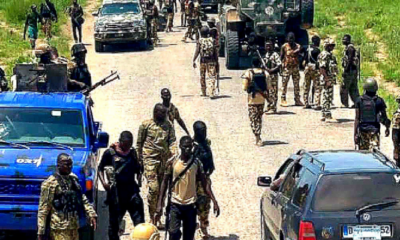
Meanwhile, the General Officer Commanding (GOC) newly deployed to 3 Armoured Division, Jos, Major General Abdulsalam Abubakar, who also doubles as the Commander of Operation Safe Haven in Plateau, has expressed readiness to hunt down the attackers and make them drink their own blood. He has temporarily relocated to Mangu LGA headquarters.

But Nigerians have seen cases where army commanders took similar steps in the past only to provide cover for the attackers.

However, President Tinubu had on Tuesday in Abuja, given very reassuring messages to the people of the state following his directive to security agencies to fish out the masterminds of the killings. He insisted that they be made to face the full wrath of law.

Since his assumption of office, President Tinubu has demonstrated his readiness and capacity to bring to an end the senseless killings across the country.

President Tinubu should further raise the bar by giving the military commanders timelines to carry out his order or be shipped out.

Continue Reading
Click to comment

Leave a Reply

Your email address will not be published. Required fields are marked *

News

Association Trains Farmers, Others On Carbon Finance

info

Published

on

By

IMG 20260619 WA0002.jpg

By Olukayode Babalola

The Sasakawa Africa Association (SAA), a Non-Governmental Organisation (NGO), has trained farmers, researchers, policymakers and extension personnel on carbon finance to position them for opportunities in the emerging carbon economy.

The two-day capacity building workshop, funded by the German Corporation for International Cooperation (GIZ), began on Thursday in Keffi, Nasarawa State, with participants drawn from Nasarawa, Benue, Cross River and Kano states.

The News Agency of Nigeria (NAN) reports that the workshop was organised by SAA under the GIZ-funded Strengthening Institutional Frameworks for Transformative Agricultural Systems in Nigeria (SIFTAS) project.

The initiative is designed to build awareness and technical capacity on carbon credits, carbon markets and agroforestry-based climate solutions, while promoting regenerative and climate-resilient agricultural practices across the country.

Speaking at the workshop, Dr Bidemi Ajibola, SIFTAS Project Manager, said that the initiative was aimed at exposing stakeholders to emerging opportunities in carbon finance and preparing them to participate in the growing carbon market ecosystem.

Ajibola said the workshop, with the theme, “Carbon Credits, Carbon Markets and Opportunities in Agroforestry Systems,” focused on carbon finance opportunities in cassava, potato and rice agroforestry systems.

“Nigeria is making significant progress towards establishing a national carbon market framework, creating new opportunities to attract investments into climate-smart agriculture and agroforestry.

“As part of the SIFTAS project, where we are promoting crop-specific agroforestry systems, we considered it important to expose our stakeholders and champions to opportunities available in carbon markets and carbon credit development,” he said.

He explained that similar workshops had earlier been held in Ibadan, Oyo State, on June 3 and 4, focusing on cassava agroforestry, and in Jos, Plateau State, on June 10 and 11, with emphasis on potato agroforestry, while the Keffi workshop centred on rice agroforestry systems.

Also speaking, Ms Rose Ritter, Technical Advisor with Sustainable Agricultural Systems and Policies project (AgSys), said Germany remained committed to supporting Nigeria and other countries in tackling climate change through emissions reduction and adaptation measures.

She disclosed that Germany provided 11.8 billion euros in international climate finance in 2024, with a significant proportion invested in agriculture and land use because of the vulnerability of smallholder farmers to climate change.

Ritter added that through the ClimA Project, GIZ was supporting the Federal Government in establishing a national agricultural carbon registry to register, monitor and verify carbon projects across the country.

In his remarks, Mr Tanko Tunga, the Nasarawa State Commissioner for Agriculture, described the workshop as timely, considering the devastating effects of climate change on smallholder farmers, who account for about 80 per cent of Nigeria’s food production.

He said that the state government had taken deliberate steps to transform the agricultural sector under the Nasarawa Economic Development Strategy (NEDS).

Tunga reaffirmed the state’s readiness to partner organisations working to address the effects of climate change and commended President Bola Tinubu for approving the National Carbon Market Framework.

According to him, the framework will support Nigeria’s climate commitments while stimulating sustainable economic growth and green investment opportunities.

Also, Prof. Ibrahim Haruna of the Department of Agronomy, Nasarawa State University, Keffi, described agroforestry as one of the most effective strategies for addressing the impact of climate change on agriculture.

“The only way to survive is to cope with climate change, and one of the most viable solutions is agroforestry. I commend GIZ and Sasakawa for sponsoring this initiative,” he said.

NAN reports that the workshop featured technical presentations, policy dialogues, interactive learning sessions and practical exercises on agroforestry systems.

Other areas of focus are carbon sequestration pathways, carbon financing mechanisms, carbon credit generation and the development of bankable agroforestry carbon projects.

Stakeholders also provided technical inputs to strengthen the carbon markets and carbon credits component of the SIFTAS agroforestry training curriculum. (NAN)(www.nannews.ng)

Edited by Isaac Ukpoju

Continue Reading

News

God will keep Tinubu in power until 2031 – Umahi

info

Published

on

By

David Umahi 1.jpg

Minister of Works, Dave Umahi, has expressed optimism that God will continue to guide President Bola Tinubu in leading Nigeria until 2031 to further the country’s development.

Umahi stated this on Thursday during an inspection tour of ongoing bridge projects in Lagos State, including the Carter Bridge, which is scheduled for reconstruction beginning next week.

According to the minister, Tinubu’s administration would continue to receive divine support in addressing the nation’s challenges, particularly insecurity.

“The same God that brought him is going to be there to solve all the problems,” Umahi said while appealing to Nigerians to support and cooperate with the current administration in its efforts to tackle security concerns across the country.

He noted that no leader desires instability during their tenure, but added that any responsible government must confront challenges directly whenever they arise.

“There is no leader who will not want his reign to be peaceful, but when crises come, the leader must confront them. That is exactly what we are doing,” he said.

Umahi further stated that regardless of whether the country’s security challenges were politically motivated or not, he believed Tinubu would receive the wisdom and strength required to overcome them and address other national issues.

The minister also expressed confidence that the present administration would complete all projects initiated under its watch.

“Your hands that have started this will complete it,” Umahi stated, adding that the government remained confident that Tinubu’s leadership continued to enjoy divine favour.

Speaking on the Carter Bridge project, the minister disclosed that the reconstruction of the bridge is expected to be completed within three years.

“It is within our five-year plan,” he added.

Continue Reading

Trending